





























Select a store
Czech Republic Czech Republic
Germany Germany
Spain Spain
Finland Finland
France France
Hungary Hungary
Ireland Ireland
Italy Italy
Netherlands Netherlands
Portugal Portugal
Austria Austria
Poland Poland
Denmark Denmark
Sweden Sweden
Ga door
Buy now, pay later
Buy now, pay later

Enjoy your Lightswing® right away

30 days to change your mind

So you have time to think about it

 Order before 4pm for same day shipping
Order before 4pm for same day shipping

We'll prepare your order the same day
Loading cart...

How to choose the right Lightswing®

Curious which Lightswing® is suitable for your situation? In this blog we tell you which choices you must make so that you get the right Lightswing®!

Want more bright ideas to help you choose? Get our monthly spark of inspiration and tips straight from Lightswing®.

Yes, inspire me!

1. Hanging one or two lamps, or a bar light

With the Lightswing® you can hang one, two, or even a bar-style pendant lamp.
If you’re going for a single pendant, the Lightswing® Single is the perfect fit.
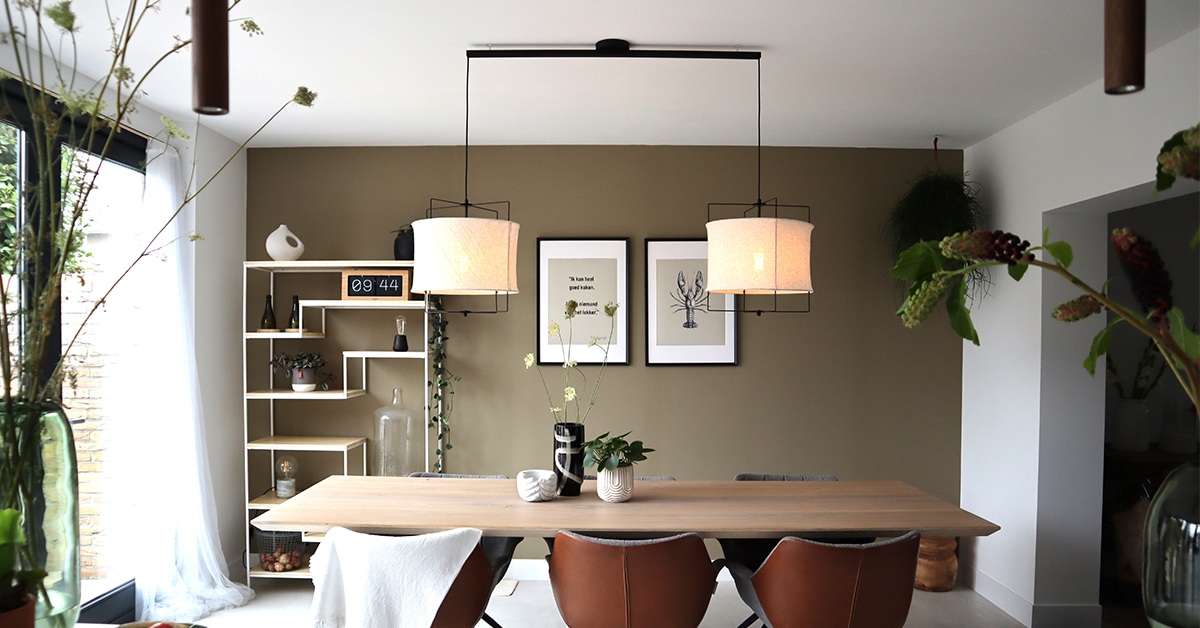
Want two lamps above your table or kitchen island? Choose the Lightswing® Twin, and the bonus: you can also use it with just one lamp, allowing you to easily switch between setups.

Looking for a clean, fixed placement for a bar or linear light? Then the Lightswing® Zero is your go-to. It’s designed for centered lighting, without sacrificing style.

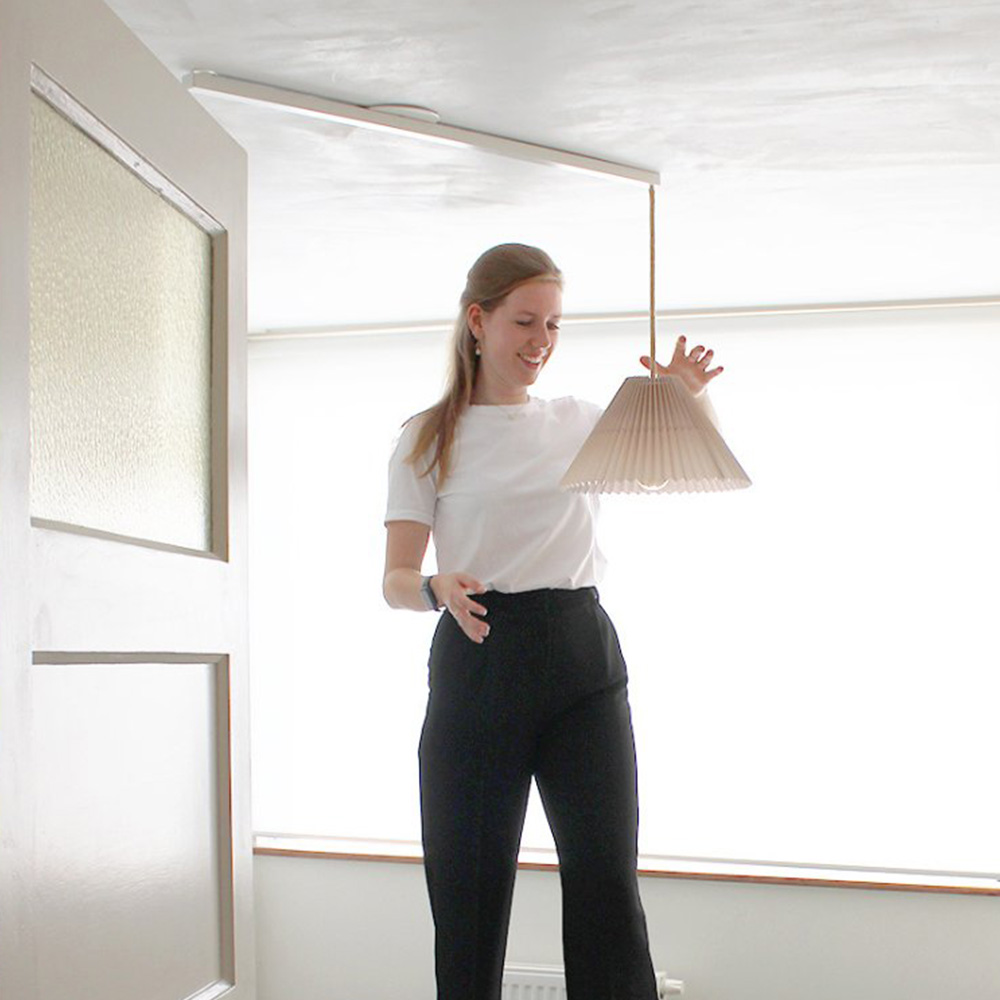
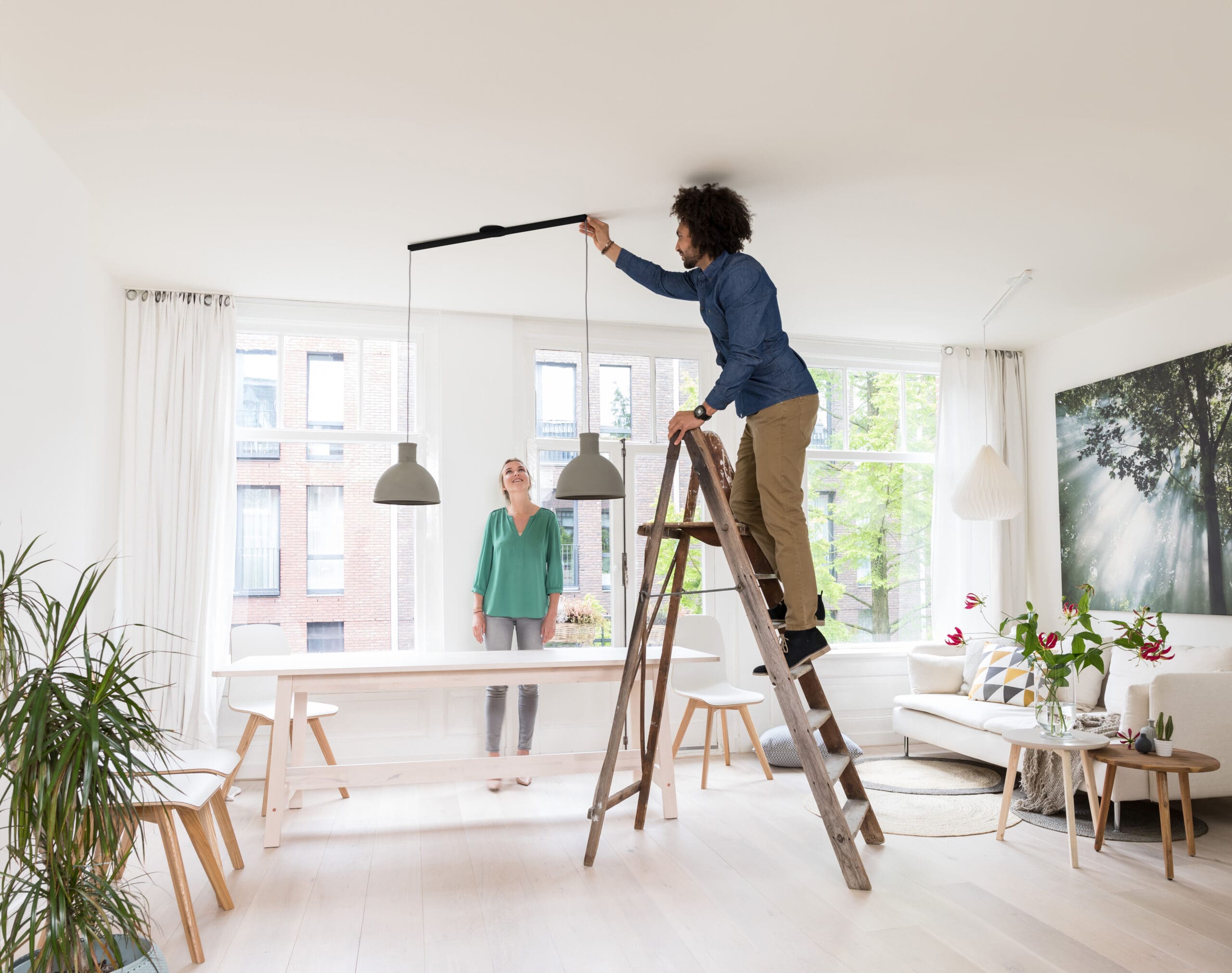
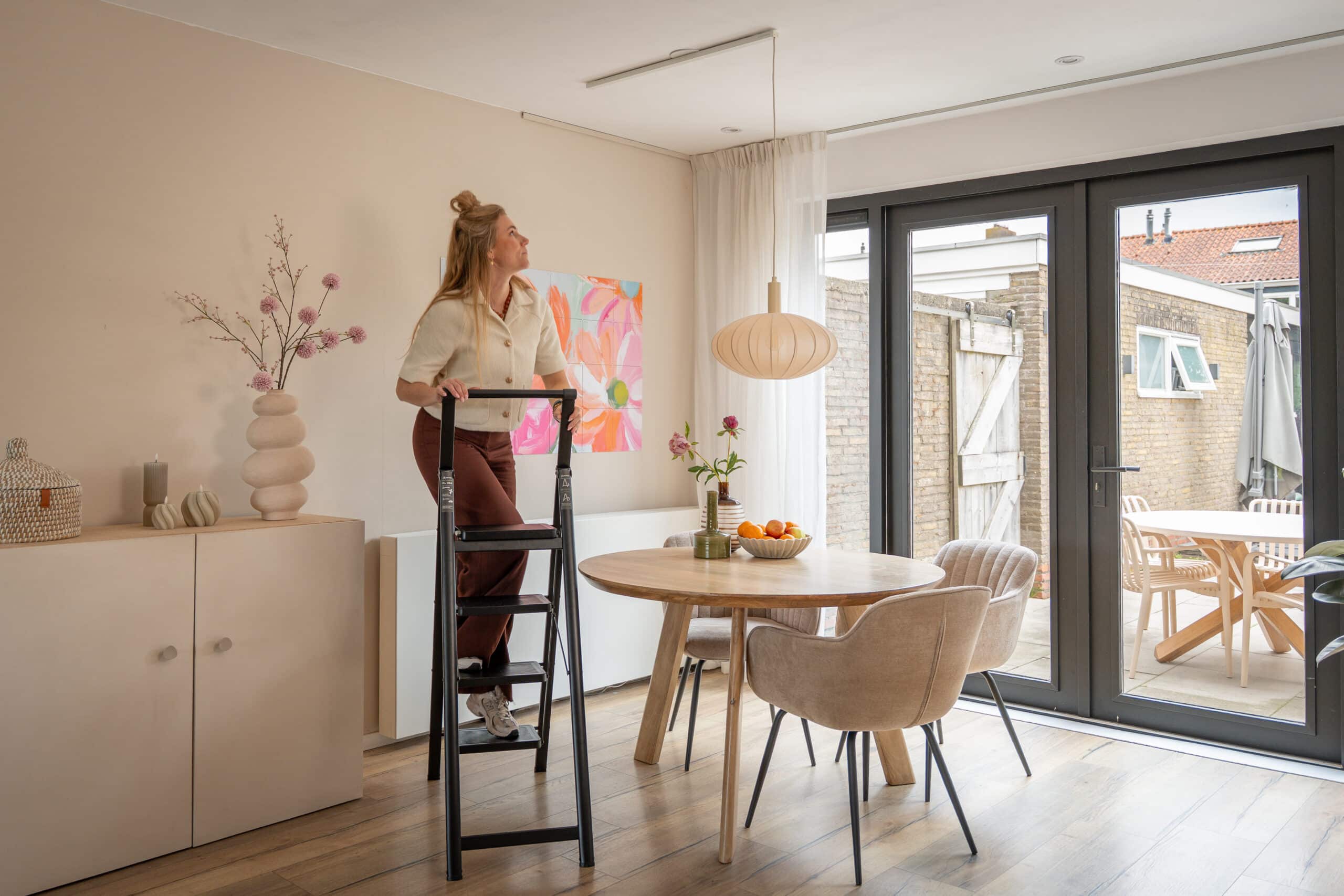
A woman hangs a pendant light on the Lightswing Single white

 2. How far do you want to move a lamp

Do you want to move a lamp? With the Lightswing® you can easily slide a lamp to another place. Each Lightswing® in our collection has its own sliding range. So measure well in advance how far you want to be able to slide the pendant lights from the connection point. We have listed the sliding range per Lightswing® for you below.

  1. Lightswing® Single 90 cm: can slide 80 cm
  2. Lightswing® Twin 90 cm: can slide 75 cm
  3. Lightswing® Single 110 cm: can slide 93 cm
  4. Lightswing® Twin 110 cm: can slide 90 cm

3. How far should the lamps hang from each other

You can attach a pendant light to both ends of the Lightswing® Twin. The distance between the pendant lights therefore depends on the Lightswing® length you choose. With the Lightswing® Twin 90cm, the lamps hang 90 cm apart. With the Lightswing® Twin 110 cm, the lamps hang 110 cm apart. How far the lamps should hang from each other depends of course on the size of the dining table or kitchen worktop.

  1. Lightswing® Twin 90 cm: two lamps hang 90 cm apart. Suitable for tables up to 2 meters
  2. Lightswing® Twin 110 cm: two lamps hang 110 cm apart. Suitable for tables longer than 2 meters

4. Which Lightswing® colour is suitable

When choosing the right Lightswing® colour, it is important that the colour of the Lightswing® fits well with the colour of the ceiling or with the colour of your pendant lights. We have listed the available colours of the Lightswing® below. Curious about which colour suits your interior type? Read it in the blog about the Lightswing® colours.

  1. Lightswing® matt black
  2. Lightswing® matt white (RAL9010)
  3. Lightswing® stainless steel

So, first, decide how many lights you want to hang on the Lightswing®. Then choose the right length. And finally, decide which colour you want. Easy, right?

Ready to find your perfect Lightswing®? Discover the collection and shop your match today.

Looking for the right Lightswing on social media

Essential tools & tips for mounting your Lightswing®

Ready to hang the Lightswing® at your home? Make sure you are well prepared and have the right tools at hand. We have listed everything you need below.

Want more handy how-to’s and bright installation tips? Get a monthly spark of inspiration and guidance from Lightswing®.

Yes, show me more
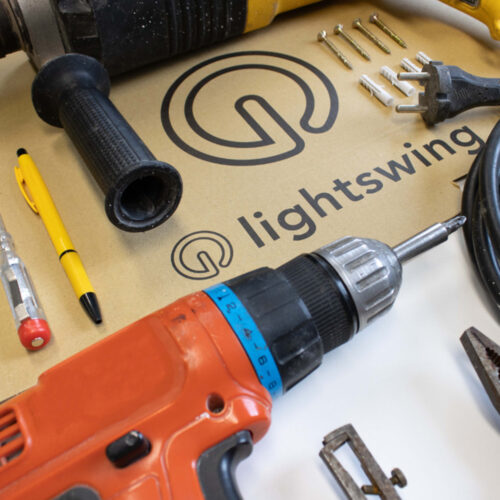
tools for mounting the Lightswing
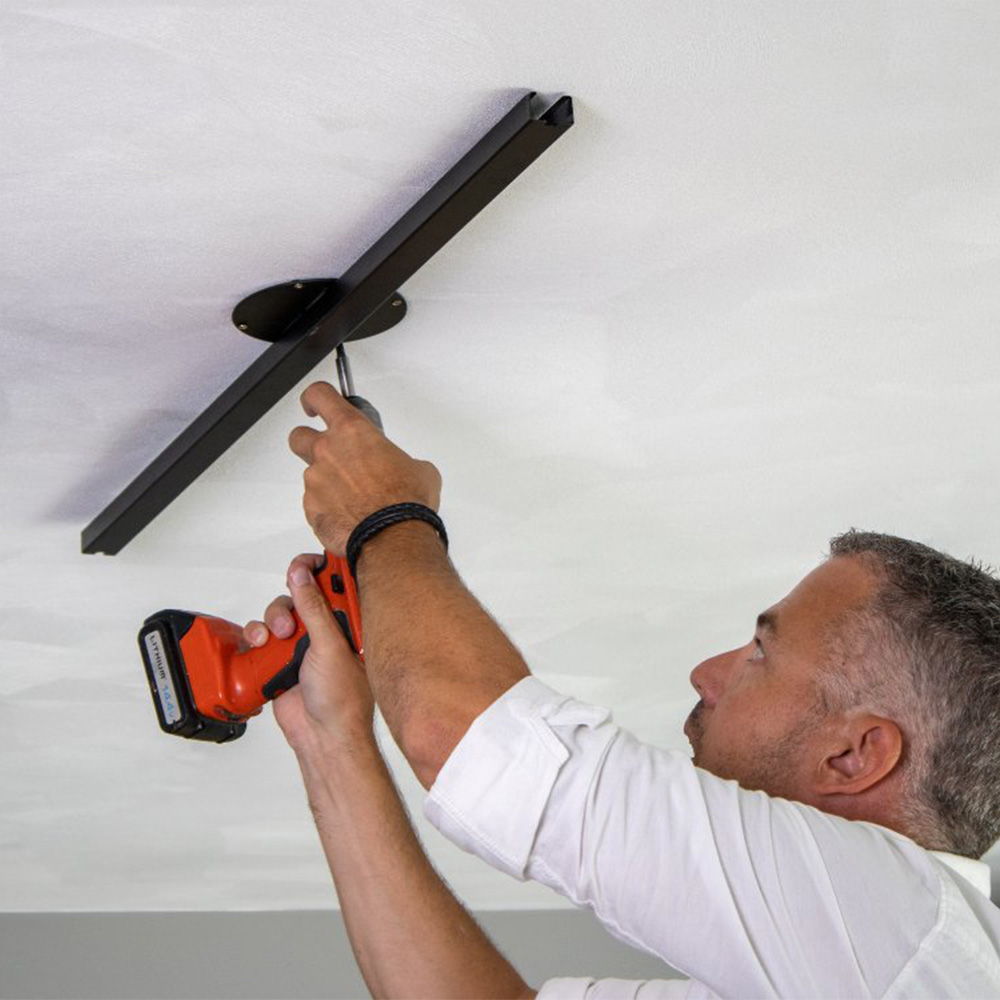
Photo of the lightswing being mounted to the ceiling.

You will need these tools.

To attach the Lightswing® to your ceiling, it is useful when you already have the following tools ready:

  1. A fitting screwdriver. You need this to attach the power wires to the connector of the Lightswing®. In addition, you can use the fitting screwdriver to attach your lamp to the Quick Release of the Lightswing®.
  2. Marker and pencil. You can use a pencil to draw on the ceiling where the drill holes should be. You use a marker to mark on your lamp cord how high the lamp should hang.
  3. A stripping pliers. You use it to cut the cord at the right height. In addition, the stripping pliers are ideal for stripping the lamp cord so that the power wires become visible and can be screwed into the crown stone of the Quick Release.
  4. Cordless screwdriver/screwdriver. You need this for screwing the surface-mounted ring and / or the Lightswing® to the ceiling. This can also be done with the help of a cordless screwdriver. You can also use the screwdriver to unscrew the screws in the Quick Release.
  5. A drill. You need the drill to drill 4 holes in your ceiling. You can conveniently draw the position where the holes must be drilled using the drilling template that is included free of charge with the Lightswing®.

Buy the right screws and plugs.

The range of screws and plugs is enormous. When buying screws and plugs to mount the Lightswing® you should pay attention to a few things. The right choice depends first of all on your ceiling type. For a plaster ceiling you need different plugs than for a concrete ceiling so, match the right plugs well to your ceiling type.

Suitable screws for the Lightswing® must meet two things: the screw head must be flat with a maximum head width of 7 mm. In addition, it is important to match the screws to the plugs you use. Take a good look at the thickness and length of the screw.

Good preparation…

Is half the battle! Have you gone through the manual, collected the right tools and bought screws and plugs? That’s great! You’re ready to attach the Lightswing® to your ceiling!

Ready to start your own project? Discover the Lightswing® collection and find the perfect match for your home today.

Shop Lightswing®

Choosing a pendant light for the Lightswing®: 3 things to look out for

Do you want to choose a suitable pendant light for the Lightswing®? In this blog we tell you which 3 things you should check, so that your chosen pendant light is suitable for the Lightswing®.

We have the max. carrying weight per Lightswing® listed for you:

Lightswing® Single 90 cm: max. 3.5 kg per pendant lamp

Lightswing® Twin 90 cm: max. 3.5 kg per pendant lamp

Lightswing® Single 110 cm: max. 2.5 kg per pendant lamp

Lightswing® Twin 110 cm: max. 2.5 kg per pendant lamp

Want more bright ideas for pairing pendant lights with Lightswing®? Get a monthly spark of inspiration, tips, and styling examples.

Yes, inspire me!
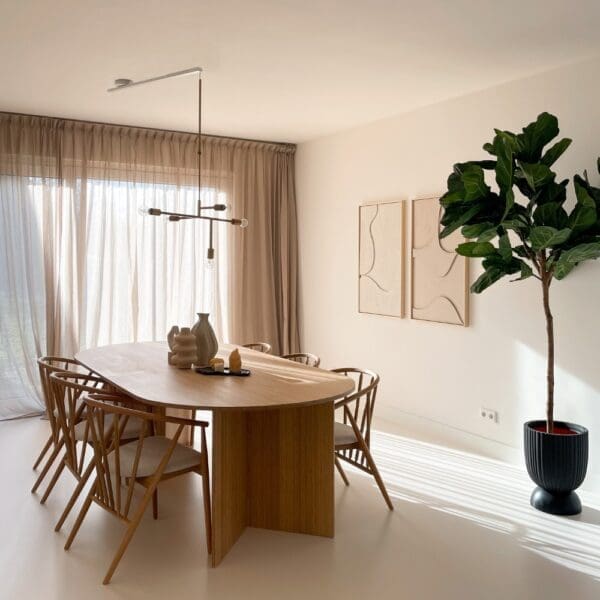
Lightswing Single white in a luxury dining room

1. Check the weight of your pendant light

The first step is to check the weight of the pendant light. The maximum weight you can hang on the Lightswing® depends on the length of the Lightswing®. The maximum carrying weight of the Lightswing® 110 cm is lower than the maximum carrying weight of the Lightswing® 90 cm. This is because the distance between the attachment point and the point where the pendant lamp is larger at the 110 cm.

We have the max. carrying weight per Lightswing® listed for you:

2. Check the cord of your pendant lamp

If you want to attach a lamp to the Lightswing®, it is important that this lamp only has one cord where the power wires run trough. To attach your lamp cord to the Lightswing®, you need to cut the cord a bit and attach the wires to the Quick Release. Does the lamp have an extra (decorative) cable or chain in addition to one cord? You can also attach it to the Lightswing®. Check out how to do that here!

3. Avoid pendant lights with a built-in dimmer or transformer

In some cases, a pendant light has a built-in dimmer or transformer. This is often attached in the ceiling cap of the pendant light. In the Lightswing® there is no space to attach the ceiling cap and the dimmer. It is therefore not possible to attach a pendant lamp with a built-in dimmer or transformer to the Lightswing®. The Lightswing® can be used with a wall dimmer!

As you can see, the three steps are practical choices you must make. This way you know what a suitable pendant light for the Lightswing® must meet. It is up to you to choose a beautiful pendant light that fits perfectly with your interior.

Ready to find the perfect Lightswing® for your home? Explore the full collection and shop your match today.

Shop Lightswing®

Is your ceiling suitable for the Lightswing®?

Are you wondering whether your ceiling is suitable for the Lightswing®? The good news is that in most cases, it is. However, there are a few things to keep in mind depending on your ceiling type.

In this blog, we explain what is and isn’t possible for different ceiling types, so you can be sure your Lightswing® is installed safely and correctly.

Want more helpful installation tips and smart lighting ideas?
Receive monthly inspiration, tips, and updates from Lightswing®.

Yes, inspire me!
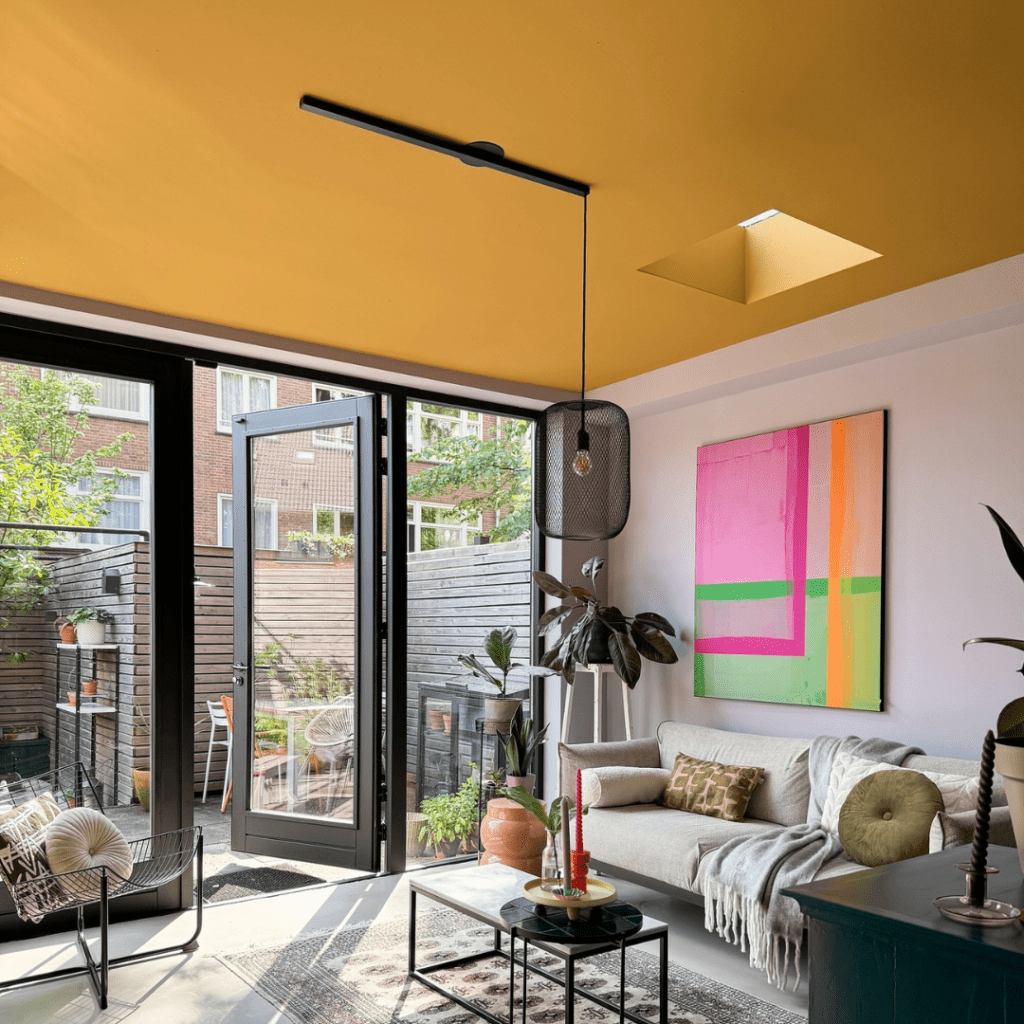
Lightswing single matt black in the living room
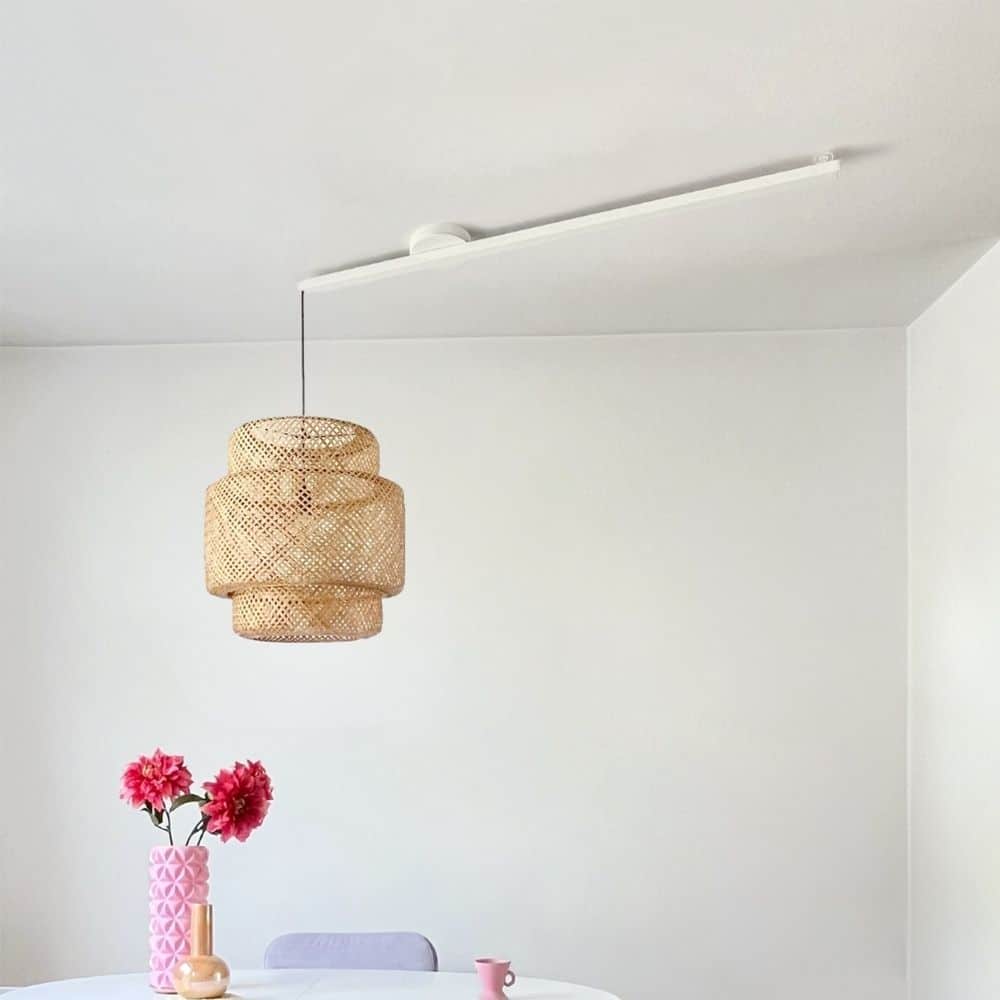
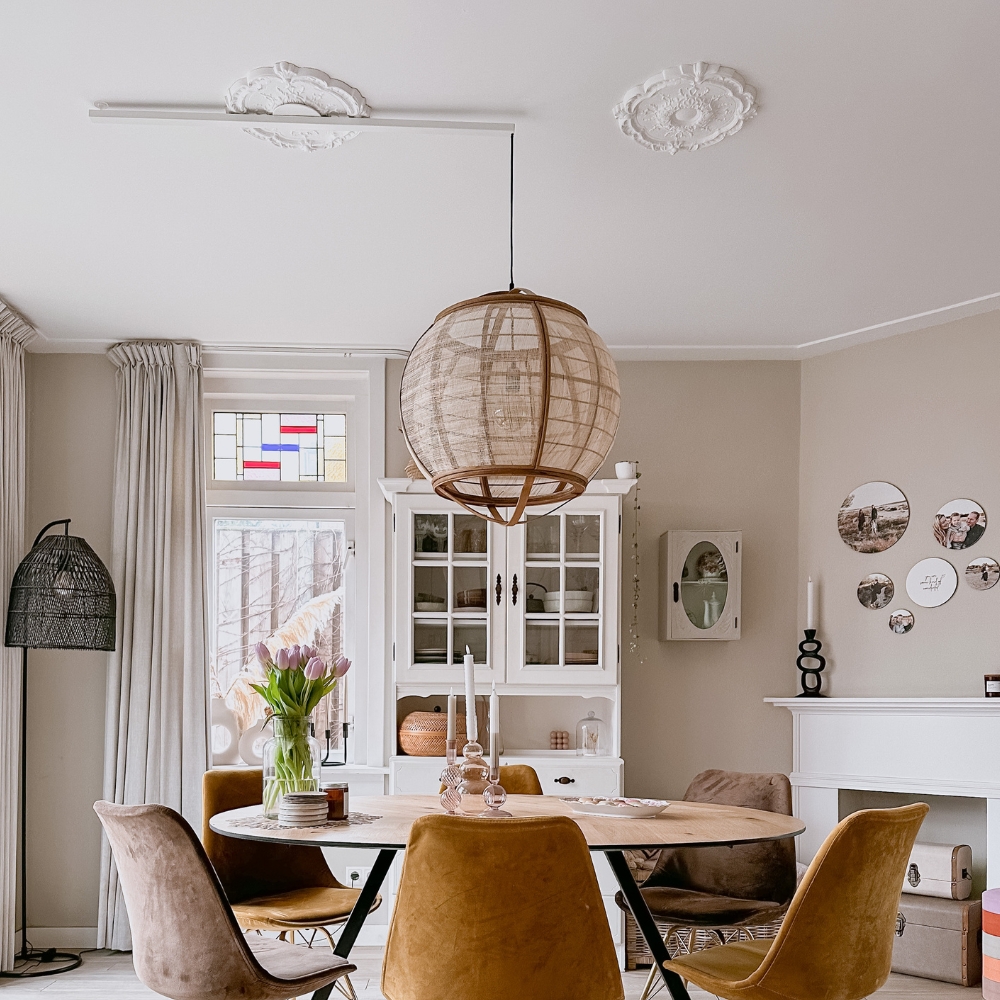
Lightswing® Single Matt White with a rattan pendant light above a dining table with pink vases and flowers in a minimalistic interior

A concrete ceiling

A concrete ceiling is fully suitable for installing the Lightswing®.

Keep in mind that the Lightswing® is not mounted only on the junction box. You will need to drill four holes into the ceiling to securely install the system. A drilling template is included to make this process easy and accurate.

A wooden or plaster ceiling

Both wooden and plaster ceilings are suitable for the Lightswing®.

If you have a plaster ceiling without a solid backing (such as wood), it is important to use the correct plugs and screws. Make sure the plugs go fully through the plasterboard so they can secure properly behind it. This ensures a stable installation.

A textured (spack) ceiling

A textured or spray-plastered (spack) ceiling is usually suitable.

Make sure you drill through the finish layer and attach the Lightswing® to the solid structure underneath (such as concrete or wood). Always use the correct plugs for a secure installation.

A ceiling with a skylight

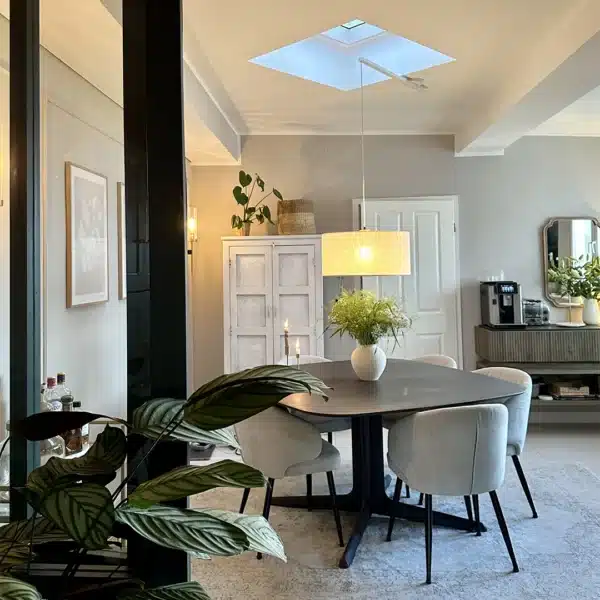
Do you have a skylight or rooflight? The Lightswing® is an ideal solution in this case.

You connect the Lightswing® to the existing light point and can then easily slide the pendant light to the desired position under the skylight, even if there is no ceiling directly above.

Want to learn more? Read the blog How to hang a pendant light under a skylight

A beam ceiling

If you have a beam ceiling, there are two installation options:

  • Mounting on the beams (recommended):
    This gives the Lightswing® enough space to slide and rotate freely.
  • Mounting between the beams:
    This is possible, but it may restrict the movement of the system.
Lightswing Single matt white installed on the ceiling above a dining table in a modern dining room with soft lighting and neutral tones
Lightswing and pendant lamp hanging from an ornament on the ceiling

A ceiling with a decorative ornament

Do you have a ceiling with an ornament? The Lightswing® can still be used.

By using a mounting ring, the Lightswing® can move freely without damaging the ornament. This allows you to reposition your pendant light without visible cables running across the decoration.

A sloped ceiling

The Lightswing® can also be installed on a sloped ceiling.

  • Suitable for slopes up to 45 degrees
  • We recommend using the Lightswing® Twin, as it offers support on both ends

Please note: avoid placing the pendant light at the lowest point of the slope. The Quick Release is not fixed in place and could come loose if the angle is too steep or the light is too heavy.

A ceiling with reed (thatched finish)

Does your ceiling have a reed or thatched finish? It is important to check what is behind it.

  • If there is wood or plaster behind the reed, you can install the Lightswing® using the correct plugs and screws.
  • If there is no solid backing, installation is not possible. Reed alone is not strong enough to support the weight of the Lightswing® and the pendant light.

A stretch ceiling

A stretch ceiling is not directly suitable for installing the Lightswing®.

Because a stretch ceiling does not provide structural support, the Lightswing® must always be mounted to the ceiling behind it (such as concrete or wood). This often requires additional installation provisions.

Almost any ceiling is suitable for the Lightswing®

In most cases, the Lightswing® can be installed without any issues, as long as there is a solid structure behind the ceiling.

By considering your ceiling type and using the correct mounting materials, you can ensure a safe and stable installation.

Ready to choose your Lightswing®?

Looking to hang one pendant light? The Lightswing® Single is the right choice.
Want to hang two lights? The Lightswing® Twin is the ideal option.

Discover the full collection and find your perfect match.

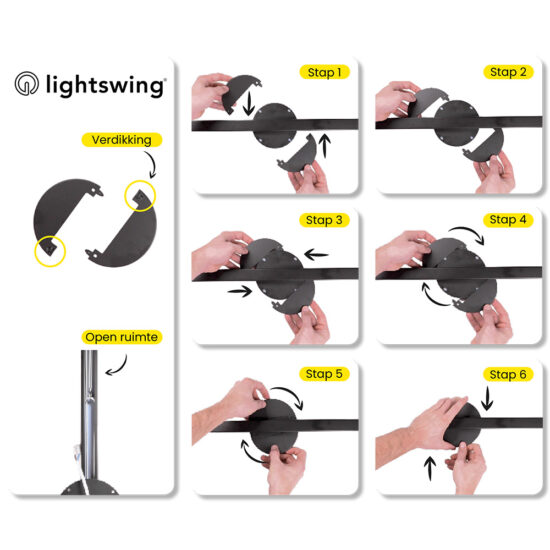
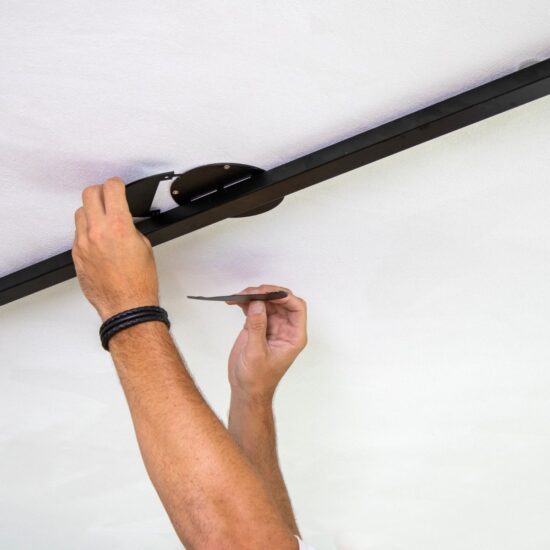
Lightswing® mounting: installing the cover plates.

The last step of the Lightswing® assembly is to place the covers. The covers of the Lightswing ensure the best finishing touch, because they cover the screws with which the Lightswing® is attached to the ceiling. In this blog we tell you step by step how you can attach the cover plates to the Lightswing®.

Want more bright installation tips and behind-the-scenes how-to’s? Get a monthly spark of inspiration straight from Lightswing®.

Yes, inspire me!

1. Bring the cover plates into position. Remove the covers from each other and bring the two caps each to one side of the Lightswing®.

2. Place cover plates between the ceiling and Lightswing®. Place the two covers with the thickening between the ceiling and the Lightswing®, so that the thickening of the caps falls into the open space of the Lightswing®.

3. Slide the cover plates towards the base plate. Because the thickening of the cover plates ‘falls’ into the Lightswing®, you have enough space to slide the caps towards the base plate of the Lightswing®.

4. Make a rotating motion. When the cover plates almost slide over the base plate, you make a rotating movement. Note that the thickening is still in the gap of the Lightswing®

5. Slide and rotate. Slide and turn the cover plates further inwards, over the base plate. Do this until the covers are facing each other.

6. Press the cover plates together. The last step is clicking the two cover plates together. To do this, press the caps together until they click.

Installing lightswing® covers

When placing the covers, it is important that the Lightswing® hangs nicely straight along the ceiling. This way you have enough space to slide the covers between the Lightswing® and the ceiling. Adjusting the Lightswing® is done with the help of the levelling foot.

Then you check whether the screws with which the Lightswing® is attached are deep enough in their holes. Do the screws stick out? Then the cover plates can be damage when turning the Lightswing®. In that case, screw the screws further into their holes or choose other screws with a smaller head size.

Lightswing® this is how you mount the cover plates
Lightswing accessories Cover caps

Want the finishing touch for your own ceiling setup? Explore Lightswing® accessories and shop your match today.

Maximize your dining space with flexible pendant light solutions

Do you often find yourself needing help to hang or adjust your pendant light? With a suspension system like the Lightswing® mounted on your ceiling, you gain complete control over your lighting without any assistance. This system revolutionizes how you interact with your pendant lights, making moving, changing, and even temporarily removing the lights a breeze.

Love smart interior solutions? Get a monthly spark of bright ideas, styling tips, and real-home inspiration straight from Lightswing®.

Yes, inspire me!
Couple changing pendant lights using Lightswing® twin

Seamlessly move your lamp with your table

Planning to rotate your dining table? No problem! The Lightswing® allows your pendant lamp to move in sync with your table. This advanced suspension system is not just for hanging lamps; its flexible arm means your pendant lamp isn’t restricted to one spot. Choose from models that offer up to 93 cm of movement and the ability to rotate 360 degrees, giving you the freedom to slide your lamp in any direction. This flexibility makes you less reliant on the original lighting position and expands your furniture arrangement options.

Always have the perfect lighting

Beyond its rotation and sliding capabilities, the Lightswing® features a handy Quick Release at the end of the arm, enabling you to quickly connect or disconnect pendant lamps. This feature is ideal for those who love to refresh their space regularly or require varied lighting for different occasions. Whether you need a single lamp or dual lamp setup, the Lightswing® Twin model accommodates both effortlessly.

Right light, right place, every time

The Lightswing® ensures that your lighting is always where you need it to be, perfectly aligned with your dining area. Just pick the color that best fits your décor, and enjoy the right ambiance at your fingertips. 🤩

Ready to take control of your dining space? Discover the full Lightswing® collection and shop your perfect match today.

Shop Lightswing®
Don't just take our word for it!

Hear from our happy customers!

Always keep your lights above the dining table

Adjusting pendant lights to align perfectly above the dining table can be a challenging and time-consuming task. Thanks to innovative suspension systems, this hassle is eliminated, allowing you to effortlessly position a pendant light exactly where you want it. This ensures that your lamps are always positioned correctly, embracing the concept of off center lighting to enhance both function and style.

Want more bright ideas on stylish dining setups and lighting inspiration? Get a monthly spark of creativity from Lightswing®.

Lightswing® twin matt black at dining table

Flexible lighting solutions

Whether you’re considering one, two, or a bar-shaped pendant light above your dining table, modern suspension systems offer unprecedented flexibility. Just like with a conventional pendant light, you only need to install the system once. From there, you can attach the pendant light of your choice to the movable arm, which can slide and rotate to any off-center position, all without drilling additional holes in the ceiling.

The Lightswing® Single is ideal for a single pendant light and offers the same smart movement and rotation. The Lightswing® Twin is perfect if you need two hanging lamps, allowing you to easily adjust both lights independently. Prefer a clean, fixed look with a bar or linear pendant? The Lightswing® Zero delivers just that, centered, minimal, and stylish.

Whichever version you choose, Lightswing® gives you the freedom to adapt your lighting to your space beautifully.

Easily alternate lamps for any occasion

Such suspension systems not only simplify the installation process but also enhance the functionality by making it easy to swap lamps or adjust their positions. This feature is particularly useful during events or when you need to clear the space; the lights can be repositioned or temporarily removed with minimal effort. Additionally, if you decide to rearrange the dining area, adjusting the lights is straightforward, ensuring they always illuminate the table perfectly, regardless of its position in the room.

Why choose Lightswing®?

There are numerous reasons to opt for this type of lighting setup whether you choose the Lightswing® Single for one lamp, the Lightswing® Twin for two, or the Lightswing® Zero for a fixed linear pendant, you’ll enjoy both ease and versatility in your home lighting design.

Explore all the possibilities of off-center lighting with these innovative designs, or keep it clean and centered with the Zero, and transform how you light up your dining space.

Ready to upgrade your dining space? Explore the full Lightswing® collection and shop your perfect match today.

The Lightswing® colour for your interior

Which Lightswing® colour do you want? Does the colour and material of the Lightswing® fit well with your interior? And more importantly; does your pendant lamp match the Lightswing®? We are happy to help you choose the right Lightswing®, so it fits in with the rest of your interior.

Need help choosing? Get a monthly spark of inspiration with styling ideas, colour tips, and real-home examples.

Yes, inspire me!

The Lightswing® matt black

Do you have an industrial pendant light that you want to transform into a real eye-catcher on your ceiling? Combine them with the matt black Lightswing®!  The Lightswing® matt black 9005 is industrial, graphic and a frequently seen colour in the house. The wonderful thing about this matted Lightswing® is that it really holds the attention. By matching the colour of the cord and the suspension system, the Lightswing® becomes a design item in your interior.

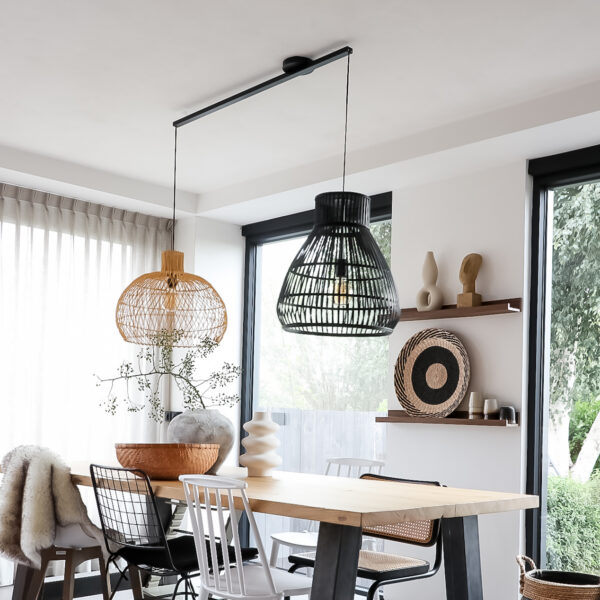
Kitchen with a Lightswig Twin black in a diningroom with big pendant lights

Lightswing® Stainless steel

A Lightswing® in stainless steel combines well with wood and concrete. Are those materials featured in your interior? Then the Lightswing® stainless steel is a great option for you. Stainless steel elements can often be seen in the kitchen, in chair or table legs or in a lamp fitting. The stainless steel Lightswing® is a stylish addition to these elements. Also, stainless steel gives your interior a timeless and modern look. Just attach a wooden lamp to the Lightswing® and you are done!

Shop Lightswing®
Lightswing Single RVS in a reading corner.
Lightswing Twin RVS in a white interior with two people at the dining table.

The Lightswing® matt white

When matching your matt white Lightswing®, it is important to first look at the colour of your ceiling. Chances are that the Lightswing® matt white RAL9016 blends perfectly with your ceiling colour. The colour of the lamp cord of the pendant lamp also has an important role.

The Lightswing® is at its best when it matches to your pendant lights. It also gives your interior a fresh look. So do you have lamps with a light lamp cord? Go for the matt white Lightswing®!

Shop Lightswing®
Lightswing single white diningroom beige
A woman hangs a pendant light on the Lightswing Single white

So, do you already know which Lightswing® colour you want? Take a good look at all the colours or get inspired and look inside different interiors where a Lightswing® hangs. Get inspired at our   ‘look inside at’  page.

Ready to choose your colour? Explore the Lightswing® collection and shop your perfect match today.

Shop Lightswing®